


International
Institute of
Islamic Thought

"It (din al-fitrah) gives him the world to reknead and remold in the service of God. To serve God is  hence to create culture and civilization. But this is none other than to attain the highest possible self-fulfillment."
Ismail al-Faruqi in Islam and Other Faiths.

Towards Islamization of Knowledge and Reform of Islamic Thought


    Search  


Prof. John Voll Delivers Annual Isma’il Faruqi Lecture

Prof. John Voll“Isma’il Faruqi is a good case of the modern intellectual who is a believer and provides a good example for thinking about what it means to be a ‘believing intellectual’ in the modern era,” said Georgetown University’s history professor John Voll who presented the Annual Isma’il Faruqi Lecture at IIIT on August 26 to an audience of over 80 scholars, activists and community leaders. Speaking on "The Challenge of the Believing Intellectual: Religion and Modernity," Professor Voll, who is also associated with the Alwaleed bin Talal Center for Muslim-Christian Understanding, reviewed how an understanding of what it means to be an intellectual has evolved over time. In the past, an intellectual could not be committed to anything, any faith or any cause; he would have to be above any commitment to be objective, or be secular in a sense. Times have changed and now it is possible to speak of being an intellectual and yet be committed to a faith or a cause, as Ismai’l Faruqi certainly was. That is why now we can speak of a believing intellectual, an intellectual who can examine issues from a unique perspective. Professor Voll opined that one of the most frequent conceptual mistakes made in discussing Islam and the West in the modern era was the identification of “the West” with “modernity.” This mistake has a significant impact on the way people view the processes of modernization in the Islamic world as well as on the way people interpret the relationships between Islam and the West in the contemporary era. Modernity is simply a phase of world history, a “set of processes that brought an end to the traditional lifestyles of medieval civilizations.” There can be and there are several “modernities”, each in a different cultural or civilizational environment, such as in Muslim societies. The techniques and infrastructure of change give modernity its unique character, according to Professor Voll. This understanding of modernity and modernization is the only way that ...

 Latest News
UK Seminar Addresses Faruqi's Legacy
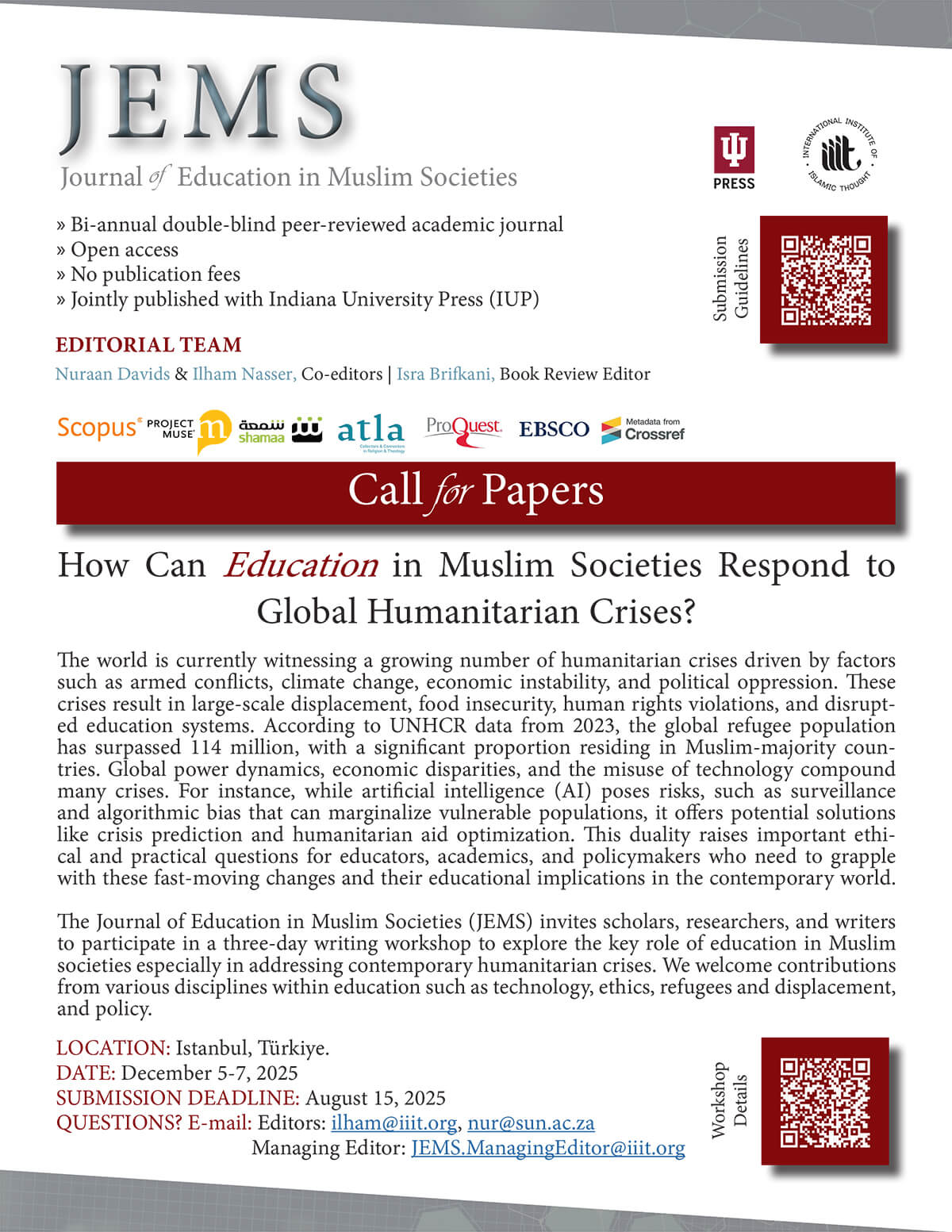
Al Faruqi Seminar AttendeesA two days international seminar on The Legacy of Ismail Al-Faruqi: Thought and Institution was held on 6-7 June 2010 at the University of Westminster in London. The seminar was jointly organized by The Centre for the Study of Democracy, University of Westminister, London, UK, Prince Alwaleed Bin Talal Center for Muslim-Christian Understanding, Georgetown University, USA and the International Institute of Islamic Thought, (IIIT) UK and USA. 
 
A total of  eleven research papers by academics from Malaysia, South Africa, UK, USA, Canada, Algeria were delivered at the seminar. These papers covered topical areas of - Islamization of Knowledge and Ijtihad Islamic Humanism, Interreligious Dialogue and Ethics; Study of Religion and Science and Modernity; ... 
 
14 Students from 10 Countries Excited to Begin Summer Students Program

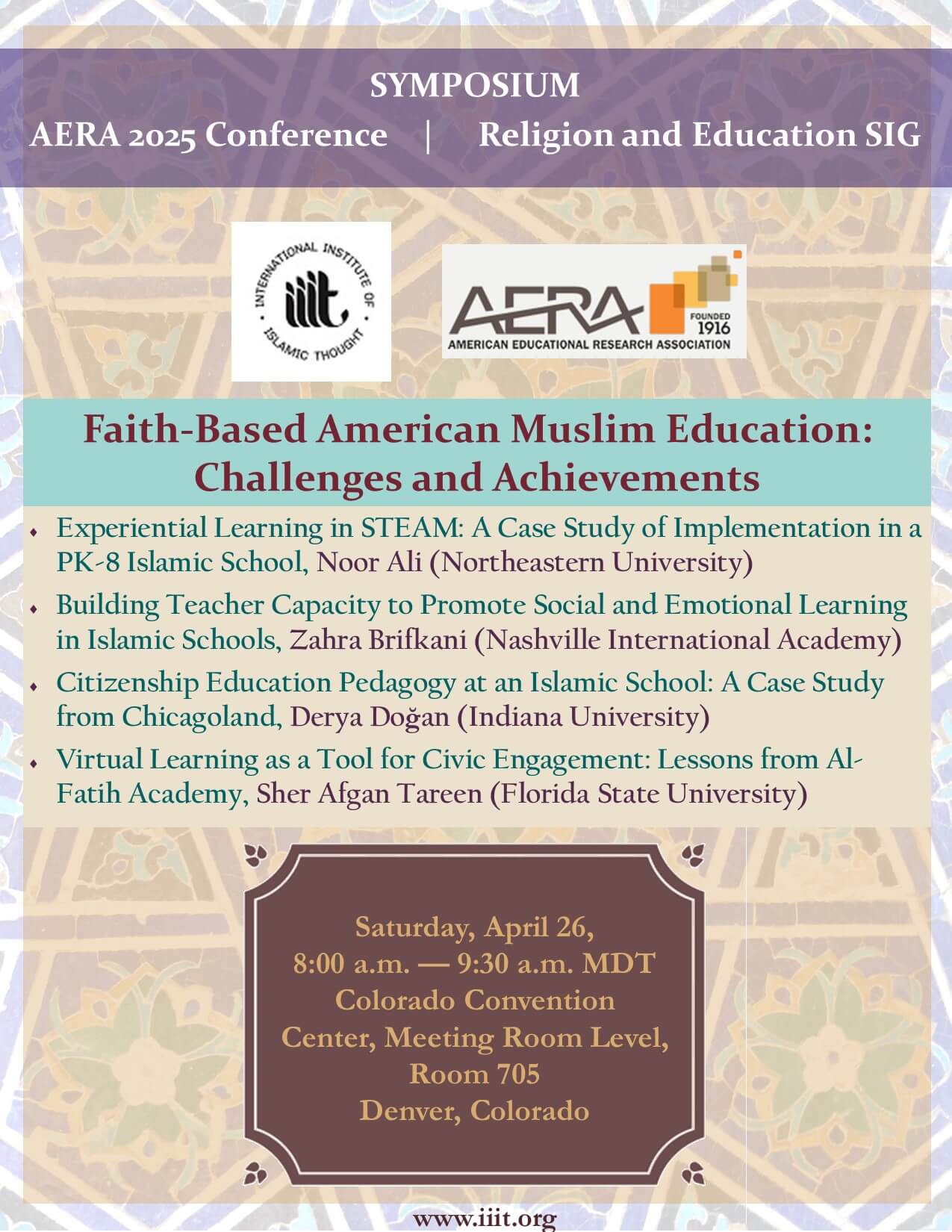
2010 Summer InternsIIIT started its 4th annual Summer Students program on June 28th, 2010 with an opening session that included welcoming  remarks and an introduction to IIIT, its history, vision and mission and current activities, featuring Dr. Jamal Barzinji, Vice President of IIIT and Dr. Iqbal Unus, Director of the Fairfax Institute, the instructional division of IIIT.

This year’s program offers five twelve-hour, core courses in Islamic studies and Muslim world affairs beside three six- hour seminars on topics such as Islamic Reform movements (taught by Dr. Hisham Altalib and Dr. Louay Safi), Faith-Based –Entrepreneurship (taught by Dr. Yaqub Mirza), and the Human Being in the Qur’an (taught by Dr. Nizar Alani). The core courses include...
 
Lecture at IIIT Focuses on Future Directions and Research Agenda for Islamic Finance

Dr. Muhammad Fahim Khan at IIIT“Islamic finance is a serious alternative that academia is still ignoring,” said Dr. Muhammad Fahim Khan, a distinguished economist speaking at a seminar at IIIT on May 28.  

In his lecture entitled “Islamic Finance: Future Directions and Agenda for Research", Dr. Khan focused on the inherent problems of Islamic Finance, its current challenges and future directions. He started off with outlining the political circumstances of the 1970s that gave rise to Islamic financial institutions such as the events in Afghanistan, the retreat of Russia, the Islamic revolution in Iran, the Islamization policy of the military government of Pakistan (under Zia Ul Haq), and Sudan’s commitment to Sharia. Islamic resurgence – he maintained – was seen at the horizon and economic institutions – and not social institutions – were to take the lead. It was not a good ...


 Upcoming Events
The Future Of Faith in the Age of Globalisation
Sep 19 2010 8:00AM
Location: Sarajevo, Bosnia and Herzegovina
The phenomenon of globalisation has unleashed unprecedented forces in the spheres of politics, culture,
More...
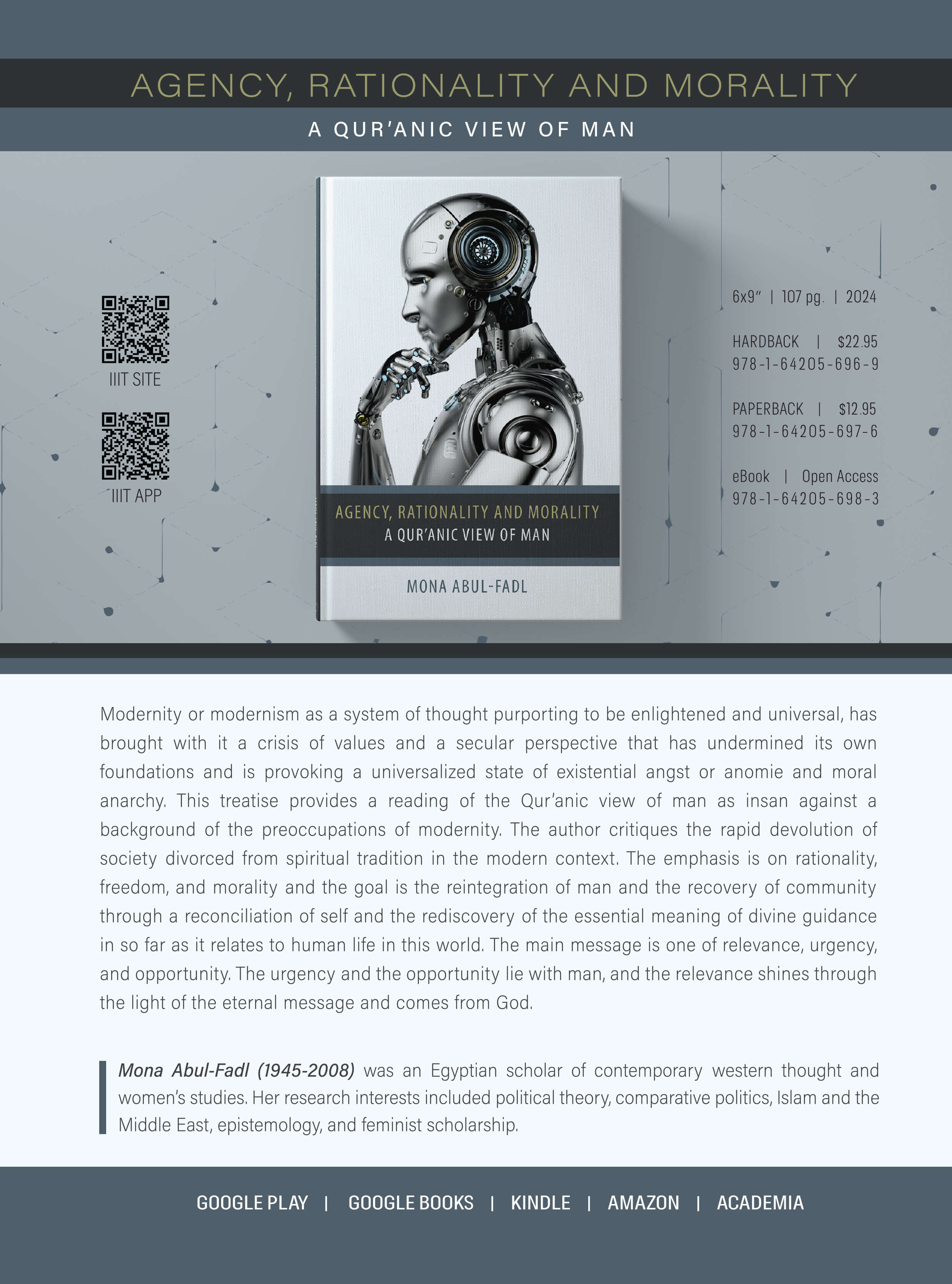
Barefoot in Baghdad
Oct 8 2010 10:00AM
Location: International Institute of Islamic Thought

Manal Omer, US Institute of Peace, will present her book "Barefoot in  Baghdad" at the International Institute of Islamic Thought. The book launc

More...


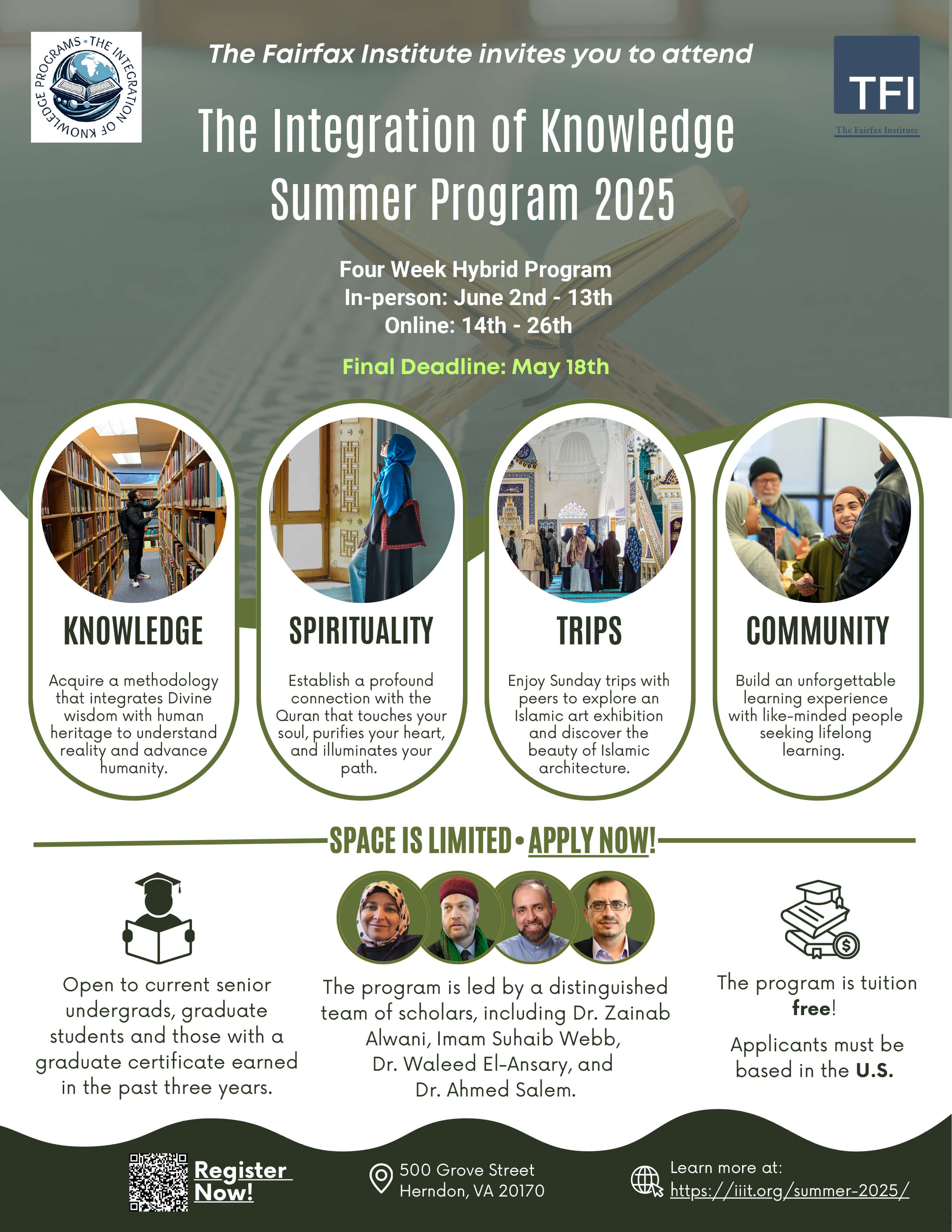
Scholars' and Students' Programs - 2010


Expand Your Worldview

Lectures @ IIIT
Scholars' Summer Program
Introduction by Dr. Jamal Barzinji


AMSS  39th Annual Conference
Click image for details


Copyright 2007 by IIIT   Sitemap | Feedback | Terms of Use | Privacy Policy | Login
 
     
ipad movies porn videos sex cams baby gifts